






FAQs
Answers to key questions about N-Tidal Diagnose technology, performance, and implementation in your practice.
What is N-Tidal Diagnose and how does it differ from spirometry or peak flow?
N-Tidal Diagnose measures CO2 patterns in exhaled breath during normal breathing,
unlike spirometry and peak flow meters which measure volume and/or speed of exhaled air.
With N-Tidal, patients simply breathe normally through the mouthpiece for 75 seconds,
making it easier for those who struggle with forced breathing tests.
What are the practical advantages of N-Tidal Diagnose?
What are the practical advantages of N-Tidal Diagnose?
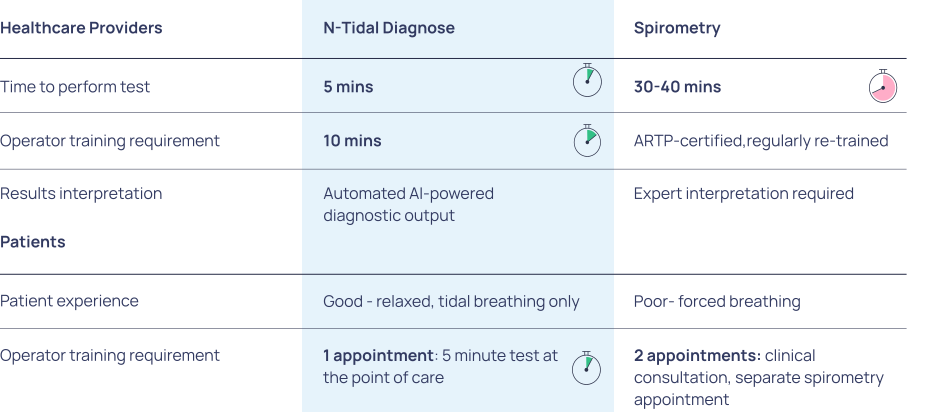
- Quick testing — test completed in under 5 minutes (vs. 30 minutes for spirometry)
- Minimal training required (basic training can be delivered in 10 minutes) and the test can be administered by a healthcare assistant
- No requirements for forced breathing, increasing accessibility of testing to more elderly patients and those with breathing difficulties
- High accuracy diagnostic output, meeting spirometry diagnostic performance standards
Does N-Tidal Diagnose provide FEV1 values?
No. Instead, N-Tidal Diagnose provides diagnostic output as likelihood of COPD and
indicates if severe disease is present (equivalent to GOLD 3/4, with 94% positive predictive value).
Is N-Tidal Diagnose just a screening tool before spirometry?
No. N-Tidal Diagnose is a diagnostic tool with diagnostic performance at least as good,
if not better than, spirometry. When patient smoking history data is provided as input to
the software, it achieves:
- Sensitivity: 90%
- Specificity: 88%
- Positive predictive value: 93%
- Negative predictive value: 93%
It is CE-marked under EU Medical Device Regulations (EU MDR) as a class 2a diagnostic device for COPD.
How reliable and safe is N-Tidal Diagnose?
The device has undergone extensive validation over several years in multiple clinical studies:
- Data to train and validate N-Tidal Diagnose's diagnostic algorithms were collected from 6 clinical studies from over 960 participants. The N-Tidal Diagnose pivotal CARES study included patients from 56 GP practices across the UK, across all age ranges and demographics.
- Over 100,000 breath recordings have been analysed to date, amounting to > 2.5 million patient breaths.
- To date, there have been 0 adverse events or incidents associated with N-Tidal Hardware.
- N-Tidal Diagnose has built-in data quality controls with automated checks and cross-validation between diagnostic models to ensure algorithmic confidence.
Can I initiate treatment based on N-Tidal Diagnose results?
As with any diagnostic test, results should be interpreted in the context of the full clinical picture, including
medical history, patient symptoms and risk factors. Therapeutic decisions should be be taken in accordance
with locally-agreed pathways.